
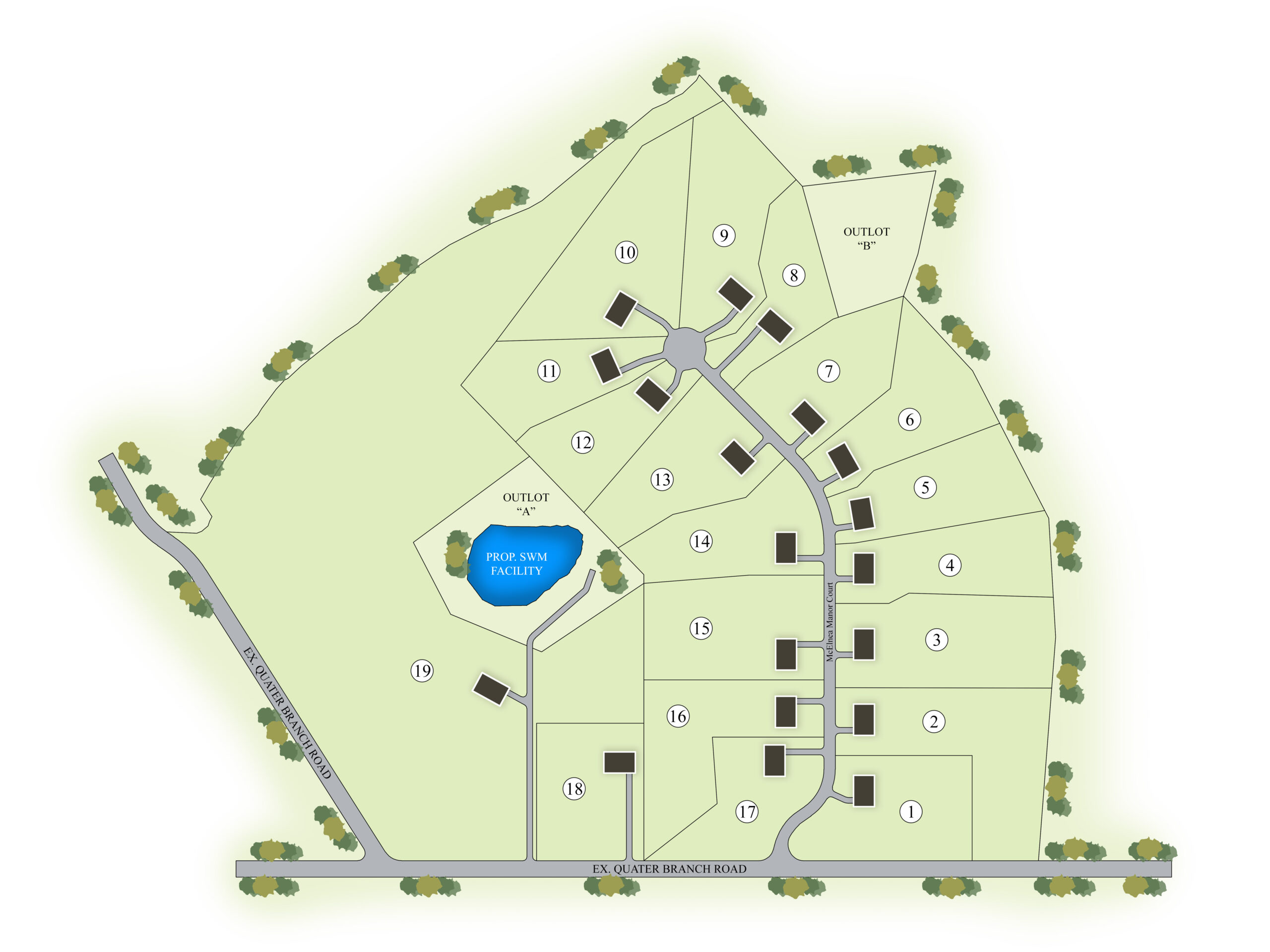
Strategic Residential Land Subdivision Development
From Raw Land to Entitled Subdivision: A Complete Development Consultation Case Study
How specialized development expertise transformed 99 acres of raw land into a successful 19-lot residential subdivision
The Strategic Opportunity
When we identified 99 acres of unimproved land in Loudoun County, Virginia, the property presented a classic development opportunity that required comprehensive analysis and strategic planning. The raw land was valued at $1.9 million, but preliminary feasibility analysis suggested significant value creation potential through residential subdivision.
This project became a defining example of how strategic development consultation, regulatory expertise, and systematic project management can unlock hidden value in residential land assets.
Reality Check: Land subdivision is not a quick wealth-building strategy. It’s a complex, capital-intensive process requiring 18-36 months (or longer), substantial expertise in regulatory processes, and sophisticated risk management. Success depends on thorough feasibility analysis, proper capitalization, and expert navigation of local approval processes.
Initial Feasibility Analysis
Before proceeding with acquisition, we conducted comprehensive due diligence to confirm subdivision viability:
Regulatory Assessment
Zoning Compliance: The property was appropriately zoned for residential subdivision, eliminating the need for risky rezoning processes.
By-Right Development: The project qualified as a “by-right” subdivision under existing zoning, significantly reducing both timeline and approval risk compared to projects requiring special exceptions or variances.
Physical Suitability Evaluation
Site Characteristics: The 99-acre parcel provided adequate size and favorable topography to support multiple residential building lots.
Infrastructure Considerations: Analysis of access, utilities, and development constraints to confirm subdivision feasibility.
Market Analysis
Comparable Research: Detailed analysis of similar subdivisions in the area to confirm market demand and validate pricing assumptions.
Buyer Interest Assessment: Evaluation of builder and developer activity to ensure adequate demand for finished lots.
The Strategic Development Process
Residential land subdivision follows a systematic two-phase approval process, though specific requirements vary by jurisdiction.
Phase 1: Preliminary Plan Development
This phase establishes conceptual approval for the subdivision layout and addresses fundamental feasibility issues:
Environmental Due Diligence:
- Comprehensive soils evaluation for septic system viability
- Drainfield location surveys and health department approval
- Phase I environmental assessment for hazard screening
- Archaeological review for historical artifact protection
- Threatened and endangered species compliance review
- Wetlands delineation and environmental protection compliance
Infrastructure Analysis:
- Hydrogeologic study with six test wells for water supply confirmation
- Preliminary subdivision plat development and regulatory application
Timeline: 12 months from project initiation to preliminary approval
Phase 2: Final Site Plan Approval
The second phase creates market-ready lots with complete construction documentation:
Technical Development:
- Detailed construction plans and engineering profiles
- Final deed of subdivision and legal lot creation
- Homeowners association formation and governance documents
- Completion of water supply infrastructure
- Final subdivision application and regulatory approval
Timeline: 15 additional months to final approval and market readiness
Project Timeline: 27-Month Development Cycle
| Pre-Submission Planning | 8 months | Feasibility analysis, consultant selection, preliminary design |
| Preliminary Plan Review | 4 months | County review and approval process |
| Site Plan Development | 2 months | Final engineering and documentation |
| Site Plan Review | 11 months | Final county approval and permitting |
| Marketing and Sale | 2 months | Buyer solicitation and contract execution |
Total Development Timeline: 27 months
The extended timeline reflected Loudoun County’s thorough review process and additional requirements for hydrogeologic testing and water supply infrastructure—typical for rural subdivision development.
Strategic Investment Structure
One of the most challenging aspects of subdivision development is securing appropriate financing, as traditional lenders view raw land and entitlement projects as high-risk investments.
Joint Venture Solution
We structured a sophisticated joint venture to overcome traditional lending limitations:
Capitalization Strategy:
- Initial feasibility studies funded to prove concept viability
- Land acquisition through combined developer equity and investor capital
- Subdivision development costs funded through investor partnership
- Proportional ownership structure sharing both risk and returns
Risk Management Benefits:
- Maintained operational control while sharing financial risk
- Avoided traditional debt financing constraints
- Provided investors with development expertise and project management
- Created scalable model for future subdivision projects
Strategic Marketing and Exit Planning
Rather than waiting until final approval, we implemented strategic advance marketing to maximize sale outcomes:
Pre-Approval Marketing
Network Development: Early outreach to qualified builders and national developers through professional relationships.
Interest Generation: Secured letters of intent from eight prospective buyers, creating competitive bidding environment.
Documentation Preparation: Developed comprehensive due diligence packages for qualified buyers.
Successful Exit Strategy
Final Sale Results: Achieved $3.99 million sale price through strategic positioning and competitive buyer interest.
Contract Complexity: Managed sophisticated 40+ page development land purchase agreement with extensive buyer protections and development contingencies.
Value Creation: Total value increase of over $2 million through strategic subdivision development process.
Key Strategic Insights for Development Consultation
This project provided valuable lessons for future residential development consulting:
1. Comprehensive Feasibility Analysis is Essential
Successful subdivision requires thorough upfront analysis of regulatory requirements, physical constraints, market conditions, and financial feasibility before committing significant resources.
2. Local Expertise and Relationships Matter
Understanding county-specific requirements, building relationships with local officials, and working with experienced local consultants significantly impacts project timeline and success probability.
3. Regulatory Risk Management
Choosing “by-right” development opportunities over projects requiring variances or special exceptions reduces both timeline risk and approval uncertainty.
4. Alternative Financing Structures Enable Success
Creative capitalization through joint ventures and investor partnerships can overcome traditional lending constraints while sharing both risk and returns appropriately.
5. Strategic Marketing Creates Premium Outcomes
Beginning buyer solicitation well before completion creates competitive dynamics that support premium pricing and favorable contract terms.
Professional Development Consultation Applications
This case study demonstrates several principles that inform our residential development consultation services:
Strategic Analysis Capabilities
Regulatory Navigation: Understanding complex county approval processes, environmental requirements, and development standards.
Financial Modeling: Comprehensive feasibility analysis including development costs, timeline projections, and market valuation.
Risk Assessment: Identifying and mitigating regulatory, environmental, and market risks throughout the development process.
Project Management Expertise
Consultant Coordination: Managing multiple specialists including engineers, environmental consultants, attorneys, and regulatory experts.
Timeline Management: Realistic project scheduling and milestone management for complex, multi- phase approval processes.
Quality Control: Ensuring all documentation and submissions meet regulatory requirements and professional standards.
Market Intelligence and Exit Strategy
Buyer Network Access: Professional relationships with qualified builders, developers, and investors for optimal project outcomes.
Strategic Positioning: Market timing and positioning strategies that maximize value realization.
Transaction Management: Complex development land sales requiring sophisticated contract structures and buyer management.
When Professional Development Consultation Adds Value
This subdivision project illustrates situations where professional consultation is essential:
Complex Regulatory Requirements: Multi-phase approval processes requiring specialized knowledge of local development standards.
Significant Capital Investment: Projects requiring substantial upfront investment with 18-36 month development timelines.
Technical Complexity: Environmental studies, infrastructure analysis, and engineering coordination requiring expert project management.
Market Strategy Development: Optimizing timing, positioning, and buyer targeting for maximum value realization.
Risk Management: Identifying and mitigating regulatory, environmental, and market risks that could compromise project success.
Professional Service Model Application
Our successful subdivision development demonstrates the value proposition of professional development consultation:
Expertise Application: Specialized knowledge of development processes, regulatory requirements, and market dynamics that most property owners lack.
Network Access: Professional relationships with qualified consultants, buyers, and development professionals essential for project success.
Risk Mitigation: Systematic approach to identifying and addressing potential issues before they become costly problems.
Strategic Planning: Long-term perspective and strategic decision-making that maximizes value creation opportunities.
Project Management: Comprehensive coordination of complex, multi-phase development processes requiring specialized oversight.
This subdivision project represents a successful application of strategic development consultation, demonstrating how specialized expertise, systematic planning, and professional project management can unlock significant value in residential land development opportunities. The complexity and timeline involved illustrate why property owners benefit from professional consultation when considering subdivision development.